
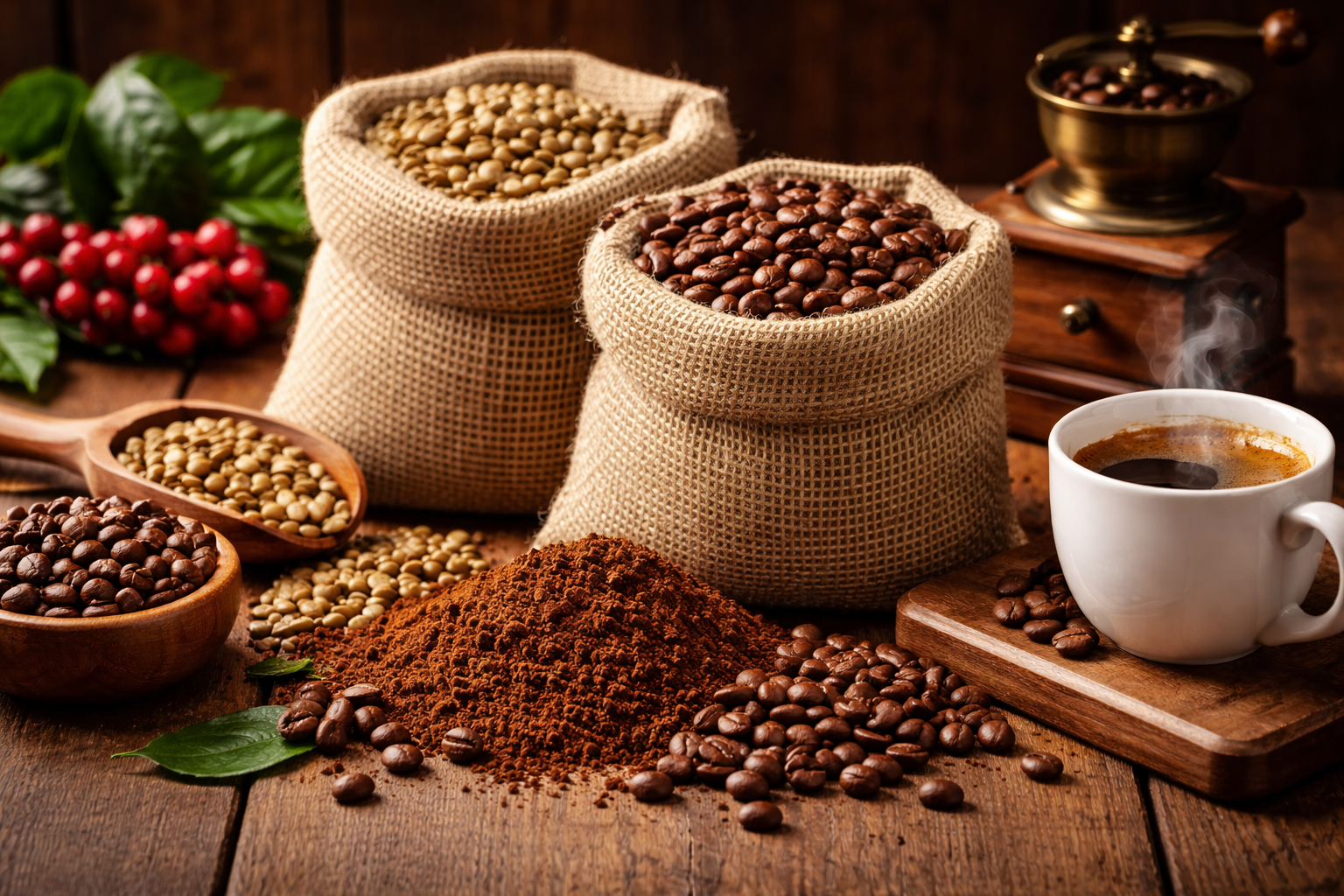
What Makes Coffee Truly Premium?
A Connoisseur’s Guide to Quality, Craft, and Experience
Introduction: Premium Is Not a Price Point
“Premium” is one of the most overused—and misunderstood—words in coffee.
It appears on packaging, menus, and marketing materials everywhere. Yet when everything is labeled premium, the word loses meaning.
True premium coffee is not defined by cost alone. It is defined by discipline, restraint, and intention at every stage of its journey—from seed to cup.
This guide exists to separate craftsmanship from claims, and to help you recognize what genuinely elevates a coffee into the realm of the exceptional.
1. Origin Is Everything
All great coffee begins with place.
Altitude, climate, soil composition, and microclimate shape the bean long before it reaches a roaster. The most refined coffees in the world come from regions where growing conditions slow development, allowing sugars and acids to mature gradually.
This is why origin matters more than branding.
In regions like Jamaica’s Blue Mountains, high elevation, volcanic soil, and persistent cloud cover create natural balance—smooth body, gentle acidity, and layered sweetness. These are characteristics that cannot be manufactured later.
Premium coffee reveals its origin. It does not hide it.
2. Selective Harvesting and Limited Yield
Premium coffee is scarce by design.
Unlike commodity coffee, which is often strip-picked for volume, high-end coffee relies on selective hand harvesting. Only cherries at peak ripeness are chosen. This process is slower, more expensive, and far more precise.
The result:
-
Greater sweetness
-
Cleaner acidity
-
Consistent cup quality
Limited yield is not a marketing strategy—it is a reality of quality.
3. Processing With Restraint
Once harvested, the way coffee is processed determines how much of its character survives.
Premium coffee processing is controlled, not rushed:
-
Careful washing or fermentation
-
Gradual drying
-
Sorting by density and size
-
Defect removal at multiple stages
The goal is clarity, not manipulation. Processing should preserve what the land created—not overwrite it.
4. Roasting as Interpretation, Not Transformation
Roasting is where many coffees lose their identity.
In premium coffee, roasting is treated as interpretation, not domination. Heat is applied with restraint to develop natural sugars and aromatics without masking the origin.
This is why micro-batch roasting matters.
Smaller batches allow:
-
Precision temperature control
-
Consistent development
-
Preservation of delicate flavor compounds
A premium roast reveals balance. It never shouts.
5. Freshness Without Obsession
Freshness matters—but premium coffee values readiness, not haste.
After roasting, coffee needs time to rest. This allows gases to release and flavors to stabilize. Rushing this stage compromises balance.
Premium coffee respects timing:
-
Rested properly
-
Packaged thoughtfully
-
Delivered with care
Freshness is not a race—it is a process.
6. Balance Over Intensity
One of the clearest markers of premium coffee is what it does not do.
It does not:
-
Overwhelm the palate
-
Lean aggressively bitter or acidic
-
Require cream or sugar to soften edges
Instead, it offers harmony.
A truly premium cup feels composed. Smooth. Complete. The finish lingers quietly, inviting another sip rather than demanding it.
7. Experience Beyond the Cup
Premium coffee extends beyond taste.
It shapes how you drink it:
-
Slower
-
More intentionally
-
With attention
It fits naturally into ritual, not routine. It elevates moments rather than filling time.
This is why premium coffee is often remembered—not just consumed.
Closing: Premium Is a Philosophy
Premium coffee is not louder.
It is more refined.
It is not more complicated.
It is more considered.
When every decision—from farm to roast to cup—is guided by restraint and respect, the result is something rare: a coffee that feels complete.
And when you encounter it, you know.
Not because it announces itself.
But because nothing feels missing.


